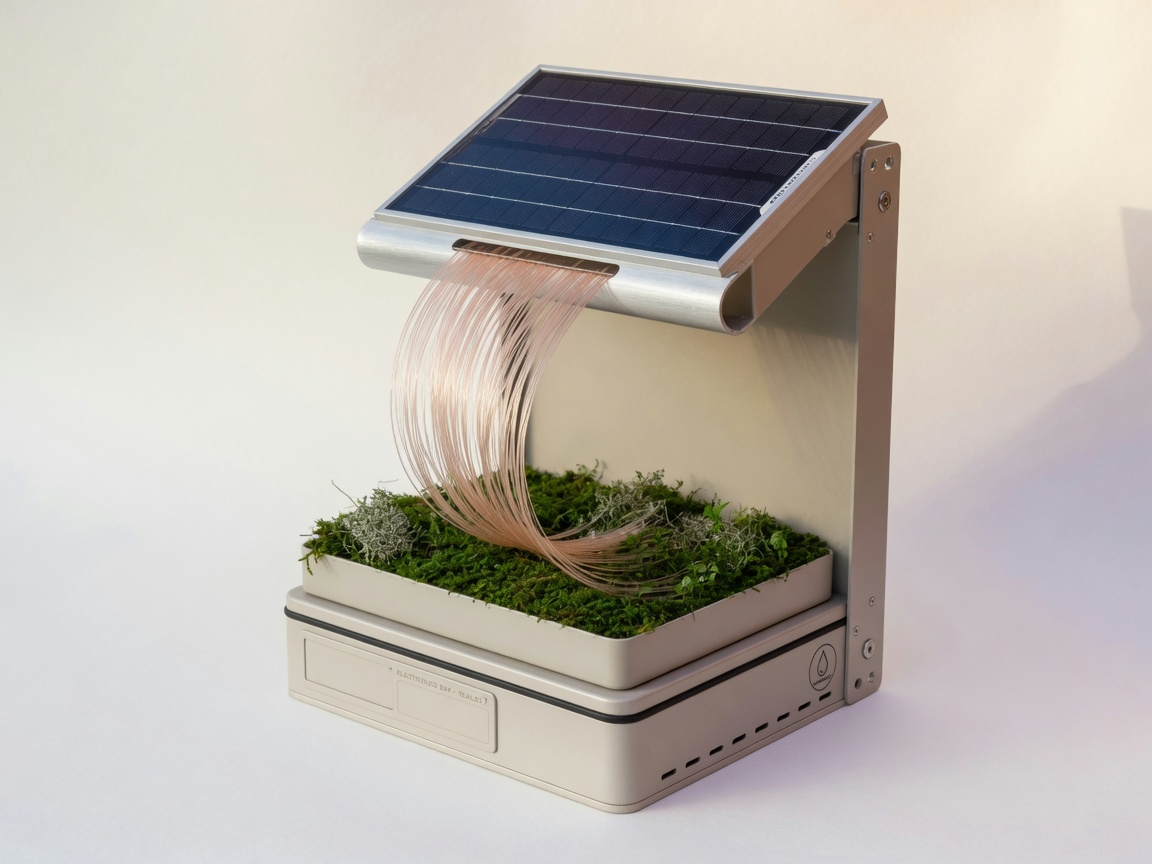
Locus is the hardware line under phronesis solar. Two schemes for local and state generation: grow your own energy (solar stack + algae battery living store), and resonance harvester systems (mechanical membrane + piezo).
These write-ups are for diligence and fundraising. Two schemes, every path that is open: grow your own energy, and resonance harvester systems — from bench kits to local and state fleets. Materials can be sourced now; instruments and pass criteria are live.
Stage today: design prototypes, open protocol, cost model, sourcing map, measured pass criteria, and interactive instruments. Capital advances builds, pilots, and fleets — grow and harvest — as far as the physics and the market allow.
Grow your own energy from the sun — and run resonance harvester systems where motion already pays mechanical work. One brand, two honest ledgers.
thesis
People and institutions want to grow energy where they live and harvest motion where they already gather. Locus is the full possible stack: grow-your-own (sun → match → fibre → algae battery + electrochemical store) and resonance harvesters (membrane + piezo), instrumented, sourceable, scalable from kit to state portfolio.
schemes
A grow_your_own_energy (L1–L5, P0–P3) · B resonance_harvester (M1–M5, RP0) · hybrid sites allowed
Everything the schemes allow: campus and civic grow roofs, community solar with living layers, water-authority culture loops, microgrids, state public fleets; plus parks, schools, transit plazas, sports floors, festival grids as resonance harvesters; hybrid campuses that run both. Ledgers can report electrical MWh, biomass, and piezo joules side by side.
moat
Two product schemes under one measured brand. Open protocol, costs, and sourcing. Product ladder with pass criteria. Instruments online for both grow and harvest. Materials already on open catalogs.
capital use
Fund every open path: P0–P2 benches → P3 outdoor → multi-unit grow fleets → state portfolios; RP0 lab → plaza → court → multi-pad parks; hybrid pilots; material R&D on membrane, piezo density, and algae culture scale.
possible
Machine list in protocol.json → possible. No closed refuse list — build what the schemes make possible.
ask
Investor and strategic partner conversations: [email protected] · subject line “Locus investor brief”. Full stack map on /locus.
scheme A · grow your own energy
Grow your own energy
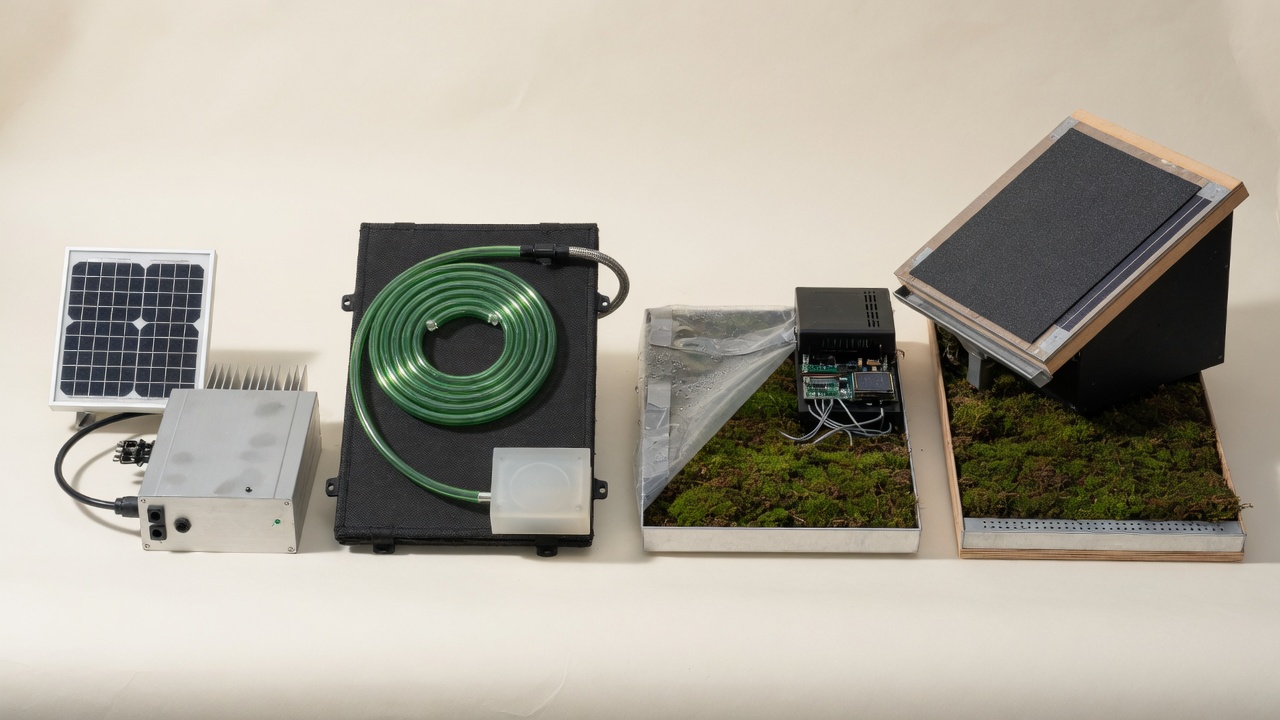
A scheme, not a metaphor: collect sunlight, match conversion so less is wasted, pipe green-window light to a living layer, and grow a chemical store in algae while electronics stay dry. Household, campus, municipal, and state fleets use the same unit.
Products below (P0–P3 + packages) are the grow-your-own ladder. Sun remains the only primary source. Algae battery charge is grown from fibre-delivered light — optical input stays in the ledger.
P0 · Match Frequency
seed prototype · materials mid ~$180 / unit one-off
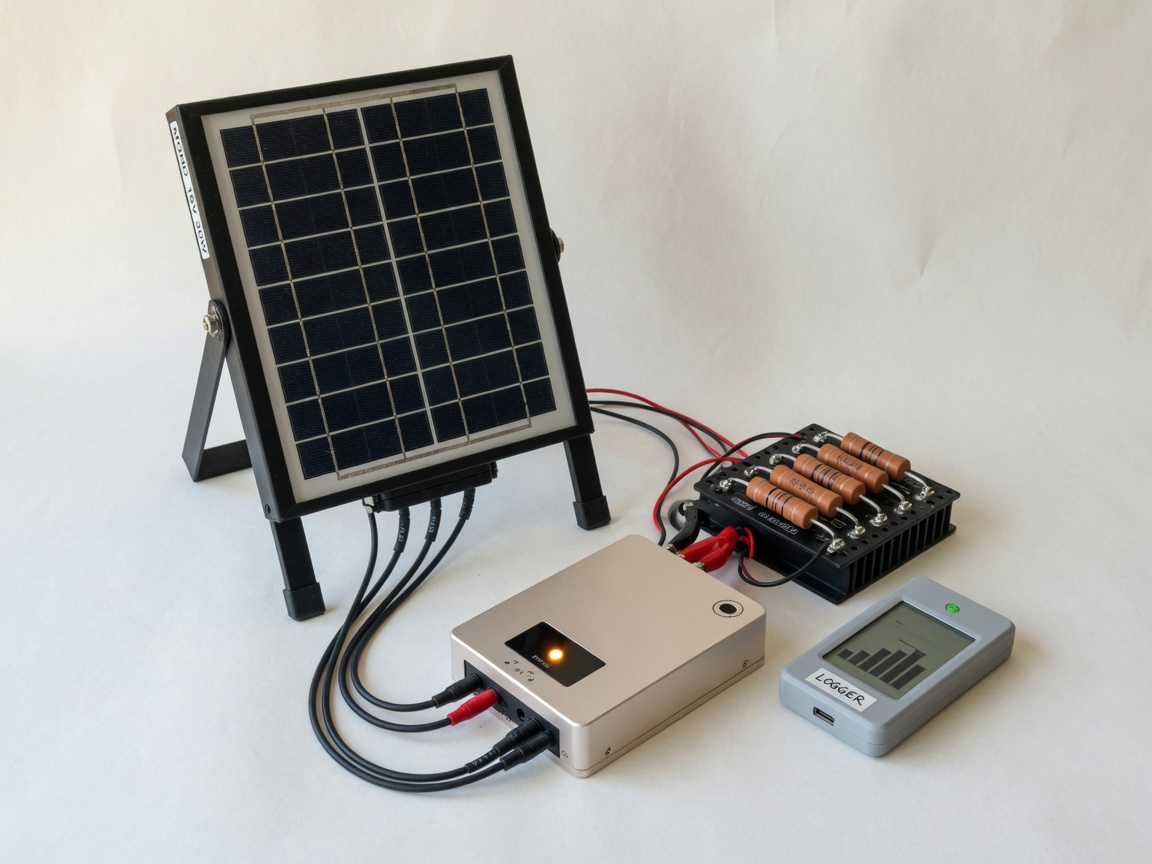
Matched solar conversion bench
The smallest commercializable unit that makes resonance measurable as delivered watts — not as metaphor.
problem
Most small solar deployments underperform because conversion is fixed-load or opaque controller black boxes. Buyers cannot prove that ‘smart’ electronics beat a baseline under the same sky. Municipal RFPs and campus pilots stall on non-comparable claims.
solution
A desk-to-roof path product: PV + MPPT (or tunable stage) + instrumented load + irradiance co-log. Pass criterion is binary: under comparable irradiance, matched path delivers more energy than fixed-load baseline on the same panel. Both curves stored in locus-lab-log/1.
market
Local generation entry SKU for labs, vocational schools, municipal energy offices, and EPCs that need a reference bench. Also the metrology core of every larger Locus unit. State programs use the same pass line for fleet acceptance testing.
edge
Conservation-visible by design. Resonance is defined as match frequency (MPPT / tuned conversion), with the studio’s free-energy refusal already on the record. Competitors sell controllers; Locus sells a measured win against baseline.
economics
One-off materials mid ~$180 (low $90 / high $350). Small-batch assembly dominates at volume; shared instruments amortize across a pilot fleet. Full model on /locus/costs.
milestone
Pass P0 outdoor interleaved runs; publish anonymised lab-logs; freeze BOM for 10-unit pilot kit.
use cases
Campus energy lab teaching module with honest pass/fail
seed prototype · materials mid ~$160 / unit one-off
Fibre-optic daylight delivery
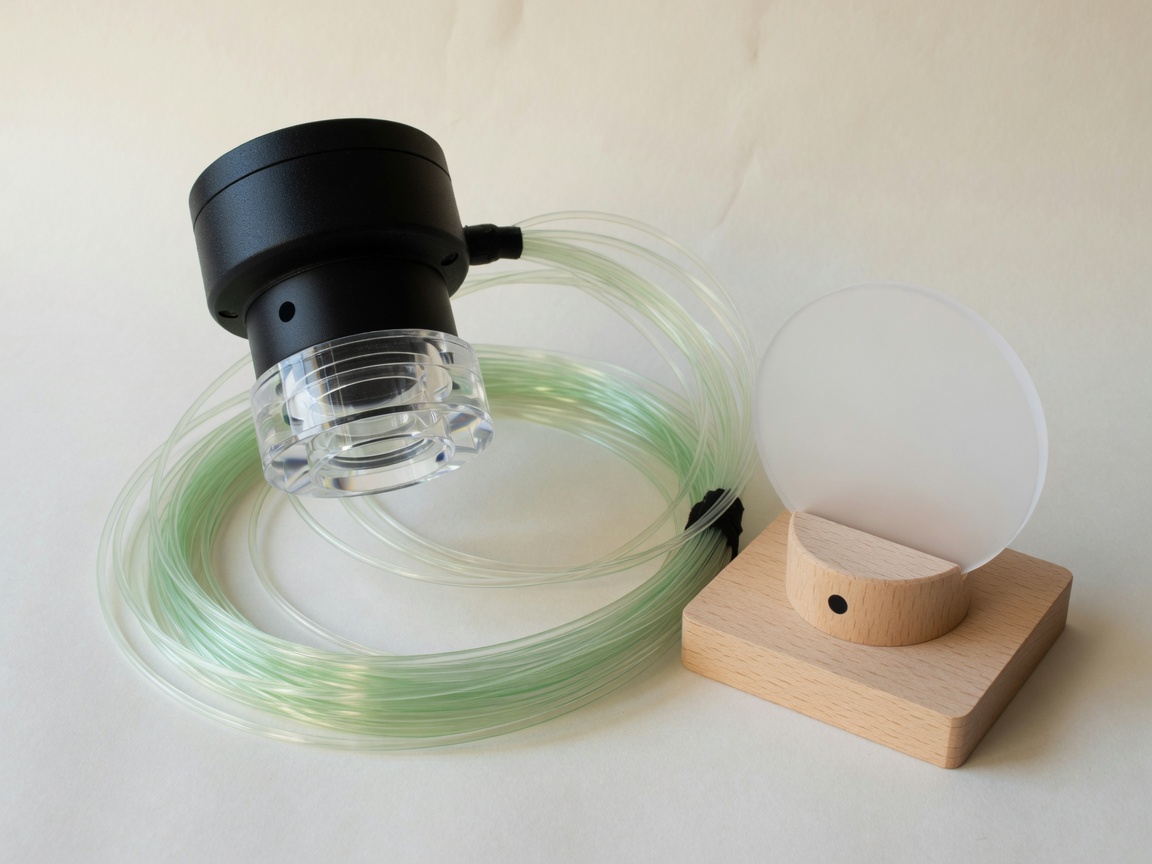
Carry sunlight as light — tens of percent end-to-end instead of under 1% for PV→wire→lamp — and document the green-shifted spectrum that long PMMA preserves.
problem
Roofs force a trade: every square metre of PV is a square metre stolen from daylight. Re-lighting interiors with electricity after conversion is energetically wasteful. Green roofs and living walls under opaque panels starve.
solution
Collector head + PMMA fibre run + diffuser. Measure input and exit; document optical delivery and spectral shift (green-window effect). This is not a free-energy claim — it is lower loss for the light destination.
market
Building-integrated daylighting for schools, civic interiors, and dense urban cores where electrical lighting load is a large share of site energy. Enables L4 live layer (moss / algae battery) under fibre exit for local and state building fleets.
edge
Optical path efficiency story (~50% class fibre daylighting vs under 1% PV–wire–lamp) plus published green-window paper. Spectrum is a product feature: organisms chosen by loss band, not décor.
economics
One-off materials mid ~$160 (fibre length and collector dominate). Length and bend radius are logged every run — cost and performance track the same BOM field.
milestone
Spectrometer-backed exit SPD on documented length; freeze collector tooling drawing for small batch.
use cases
Daylight injection to interior wet labs and classrooms
Feed for P2 algae battery / moss tray under public roofs
State building stock retrofit package (daylight + living layer)
seed prototype · materials mid ~$120 / unit one-off
Wet–dry envelope with algae battery
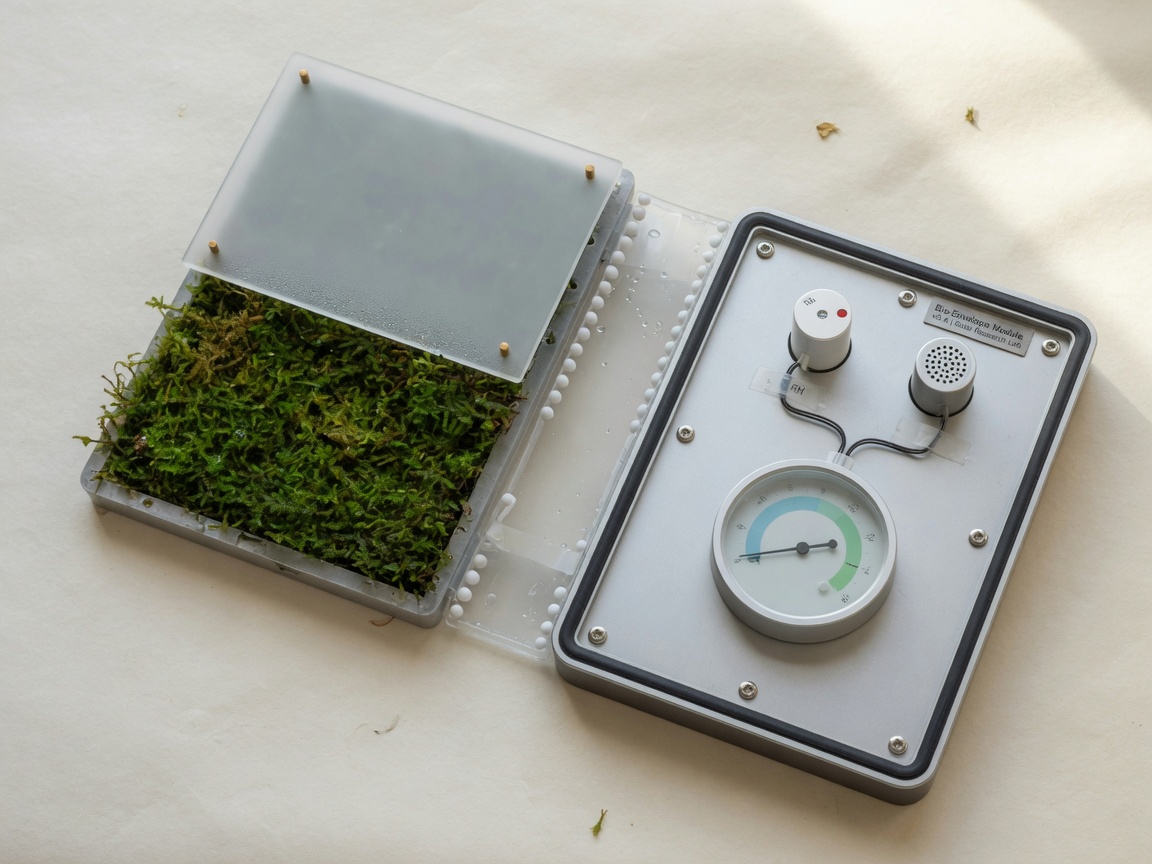
Couple heat, decouple water — living layer and electronics in one module — with green algae as a biomass chemical battery under the fibre exit.
problem
Green infrastructure and electronics share a building and fight over air. Transpiration that keeps moss or algae alive pushes RH toward corrosion. Buyers who plant roofs without a vapour strategy lose equipment. Separately, electrochemical storage is the only store most DER RFPs understand — chemical storage of light as biomass is rarely instrumented.
solution
Modular wet bay (shade moss and/or green algae culture) + sealed dry bay + vapour barrier + dual T/RH. Algae battery mode: storage.mode = algae_biomass; SoC via OD and dry mass; always co-logged with fibre lux_exit. Pass: wet side viable ≥48 h, dry side inside pre-stated envelope, SoC proxy present when algae is the store.
market
Local: school labs, municipal pilot roofs, campus living-building modules. State: water-authority culture loops, public-building living façades with IT closets protected, portfolio chemical-store accounting separate from MWh.
edge
Dual product identity in one envelope — climate buffer + biomass battery — under a published moisture rule (One Air, Two Appetites). Algae grows chemical store from fibre light. Lab-log fields make the claim auditable.
economics
One-off materials mid ~$120 (enclosure + dual sensors + moss/algae). Optional OD path $15–80. Culture OPEX is water quality and CO₂ note, not a hidden second generator.
milestone
48 h dual-climate pass with algae OD charge curve; define dry-harvest discharge procedure for food/measured biomass path.
use cases
Algae battery charge demonstration for energy offices
Vapour-safe living roof module beside electronics
State water-site culture loop pilot under fibre daylight
seed prototype · materials mid ~$450 / unit one-off
Integrated local generation unit
One integrated unit: collect, match, carry, live, dual-store, envelope — the product that becomes a local generation fleet and, in aggregate, a state portfolio.
problem
Component kits never become policy. Local and state energy generation programs need a unit they can buy, log, and replicate — not a collage of vendors with incompatible data. Integrated claims without P0–P2 proof are rejected by serious diligence.
solution
Frame integrating PV, fibre drop, wet tray/culture (moss and/or algae battery), sealed dry bay, outdoor connectors and fuse. Full lab-log channels. Pass: P0–P2 criteria hold together for one continuous daylight period. Still not a commercial install date until a real install exists.
market
Primary commercial SKU path for local DER fleets (campus, municipal, community solar, microgrid nodes). State energy generation = many P3-class units under one protocol, not a single mythical plant.
edge
Only unit that closes the full Locus thesis in one assembly. Investor story is fleet economics of identical measured units, not a black-box megawatt claim.
economics
One-off materials mid ~$450 (low $220 / high $900). Small-batch 10/50/100 on /locus/costs; excludes permits, UL/CE, install wages. Instruments shared across pilot fleets.
milestone
Outdoor daylight pass with archived lab-log + photos; safety review; first 3–10 unit local pilot LOI.
use cases
Flagship local generation node for a city energy office
State public-building pilot tranche (N identical units)
Microgrid DER node with dual storage (electrical + algae biomass)
Parallel scheme to grow-your-own: precision-engineered membrane at match frequency; piezoelectric conversion of cyclic strain. Drivers pay the work. Ground anchors are structure — not a free energy well. Complements solar fleets where people already move.
Live model: /field/resonance-pump · tune drive to f₀, watch piezo watts die when drive is off
problem
Public spaces and transit floors dump mechanical energy as heat and noise. Foot traffic, play, and sports already do work — almost none of it is metered or recovered. Simultaneously, free-energy vendors claim trampolines or earth resonance as sources, which destroys diligence trust for real mechanical harvest.
solution
A large resonant membrane (trampoline-class, precision fabrics/elastomers, engineered tension and mass loading) matched to the drive frequency of users. Piezoelectric patches at high-strain nodes convert a fraction of damping/strain power to electricity; the rest is heat (honest friction path). Rectifier + small store. Binary pass: piezo energy integrates only while drivers do work; drive off → power → 0.
physics
f₀ = √(k/m) / 2π. Match drive to membrane resonance for max strain and harvestable power. Piezo converts cyclic strain; damping remainder is heat. Engineering knobs: k, m, γ, η, pad count, area.
market
Parks, schools, sports courts, transit plazas, festival floors, multi-pad recreation grids. Complements grow-your-own P3 fleets on hybrid sites. State packages: public recreation portfolios with instrumented pads alongside solar grow fleets.
edge
Live interactive ledger. Materials knobs are engineering parameters. Open sourcing for mats, piezo, frames. Parallel scheme to grow-your-own — runs alone or hybrid with solar on one campus.
economics
Materials only (one-off mid, USD): lab bench pad ~$420 (low $180 / high $900); plaza pad ~$2,800 ($1.2k–$5.5k); court / large ~$9,500 ($4.5k–$18k). No labor, freight, or cert in those numbers. Full tables on /locus/costs#costs-rp0 and materials-only rollup #costs-materials-only. Parts already stocked — sourcing map · sourcing.json. Revenue story is co-located generation + public amenity, not baseload plant replacement.
milestone
Instrument live (done). Materials cost model published. Next: lab-scale mat with instrumented piezo chain; outdoor foot-traffic pilot; lab-log schema extension for mechanical runs; safety envelope for public use.
use cases
School playground resonance pad with classroom energy dashboard
Transit plaza foot-harvest nodes feeding lighting load (fractional)
State parks portfolio of instrumented recreation membranes
Diligence counter-example: prove free-energy trampoline claims fail the ledger
Not separate physics — packaging of the same products for buyers and capital.
local grow package
Grow-your-own site DER: one or more P3 units + P0 acceptance kit + logging standard
Buyer: campus facilities, municipal energy, community solar operators, school districts. Deliverable: measured units with lab-logs, dual store per site, vapour-safe live layer. Success metric: N units green on P3 pass; failures retained.
state portfolio package
Fleet of identical local units under one protocol — public buildings & water sites
Buyer: state energy offices, public works, water/wastewater authorities. Deliverable: portfolio dashboard of schema-valid runs; electrical MWh and algae biomass separate; no state claim without local measured units. Success metric: portfolio energy = sum of valid logs; install language only when installed.
algae battery option
Chemical storage SKU path inside P2/P3 — charge as growth, discharge as measured harvest
Parallel to L2 electrochemical cells. SoC: OD + dry mass. Investor story: second storage modality on the same sun, instrumented. Optional food / dry-harvest path after charge curves exist.
resonance harvester site package
Public-space resonance harvester nodes (RP0) alongside grow-your-own solar packages
Buyer: parks, schools, transit authorities, event venues. Deliverable: instrumented membrane with piezo chain, energy ledger, safety envelope. Pairs with P3 grow fleets for mixed local generation — hybrid sites fully in scope.
possible paths
No refuse list. If the schemes open a path, it is on the table.
Grow your own energy
Citizen / school grow kits (P0) through full P3 roof units
Municipal and community solar with fibre daylight + living layer
Algae battery culture loops, including water-authority sites
Microgrid nodes with electrical + biomass store
State public-building portfolios under one protocol
CEA / vegan colony coupling where envelope practice transfers
Resonance harvester systems
Lab bench pads → plaza pads → court / large membranes
Transit and festival floor grids; multi-pad parks with shared rectification
High-strain material R&D (elastomer, piezo density, Q)
Public joule dashboards on instrumented sites
Combined
Hybrid campuses and state portfolios (grow + harvest)
Open catalogs for materials; shared lab-log and investor data room
investor summary
company
phronesis solar — studio venture of phronesis.world
line
Grow your own energy + resonance harvester systems — local and state generation
slogan
sun is the harvest, resonance is the frequency
schemes
A: grow your own energy (P0–P3, algae battery) · B: resonance harvesters (RP0)
products
P0 Match · P1 Fibre · P2 Envelope (algae battery) · P3 Roof unit · RP0 Resonance harvester · Local & State packages
status
Design prototypes, open protocol, cost model, sourcing; grow instruments + resonance harvester instrument live. Ready to fund builds and pilots across both schemes.
possible
Grow fleets, algae battery loops, citizen kits, state portfolios, plaza/court harvesters, hybrid sites — see protocol.json possible[]